KNOWLEDGE
KASK ROTATIONAL IMPACT WG11 TEST
Jan
KASK developed the KASK Rotational Impact WG11 test to offer the safest helmets. This level of protection far exceeds the requirements of international standards. Thanks to our scientific training and intensive testing, we create head protection that delivers outstanding performance even under the most rigorous testing procedures.
Our safety protocol has been tested and approved by independent laboratories. We are committed to the highest safety standards for all your journeys.
KASK always strives to manufacture products that offer both excellent safety and comfort, exceeding the requirements prescribed by international standards and norms.
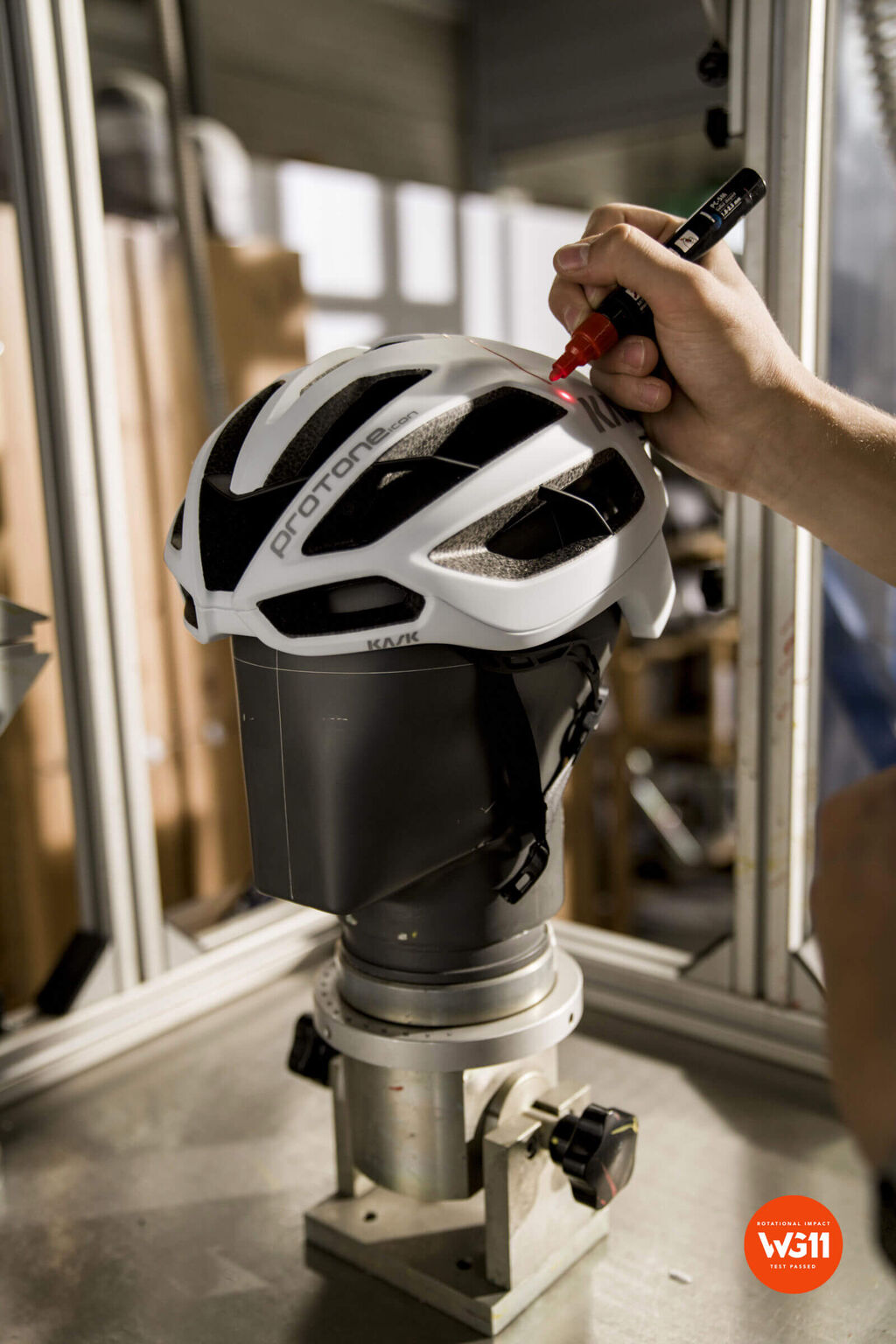
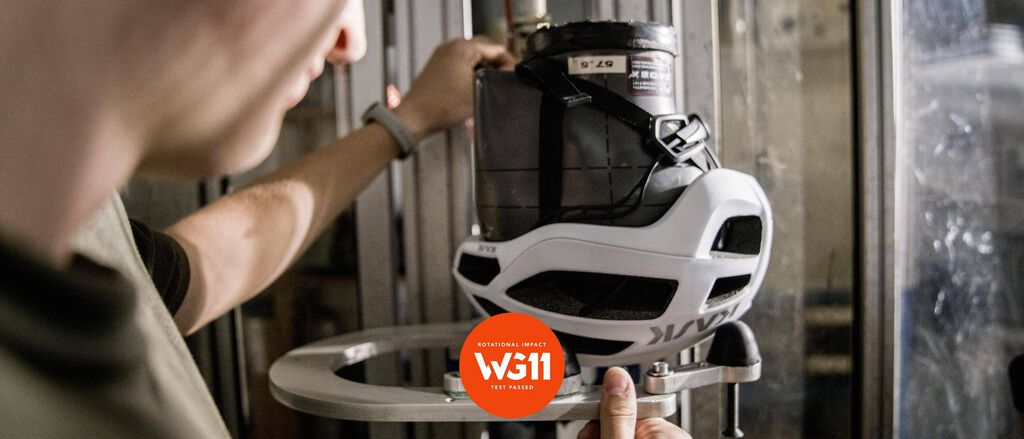
KASK ROTATIONAL IMPACT WG11 TEST is an internal protocol adopted by KASK to establish an objective method for measuring the protective effect of its helmets against rotational impacts, based on scientific sources.
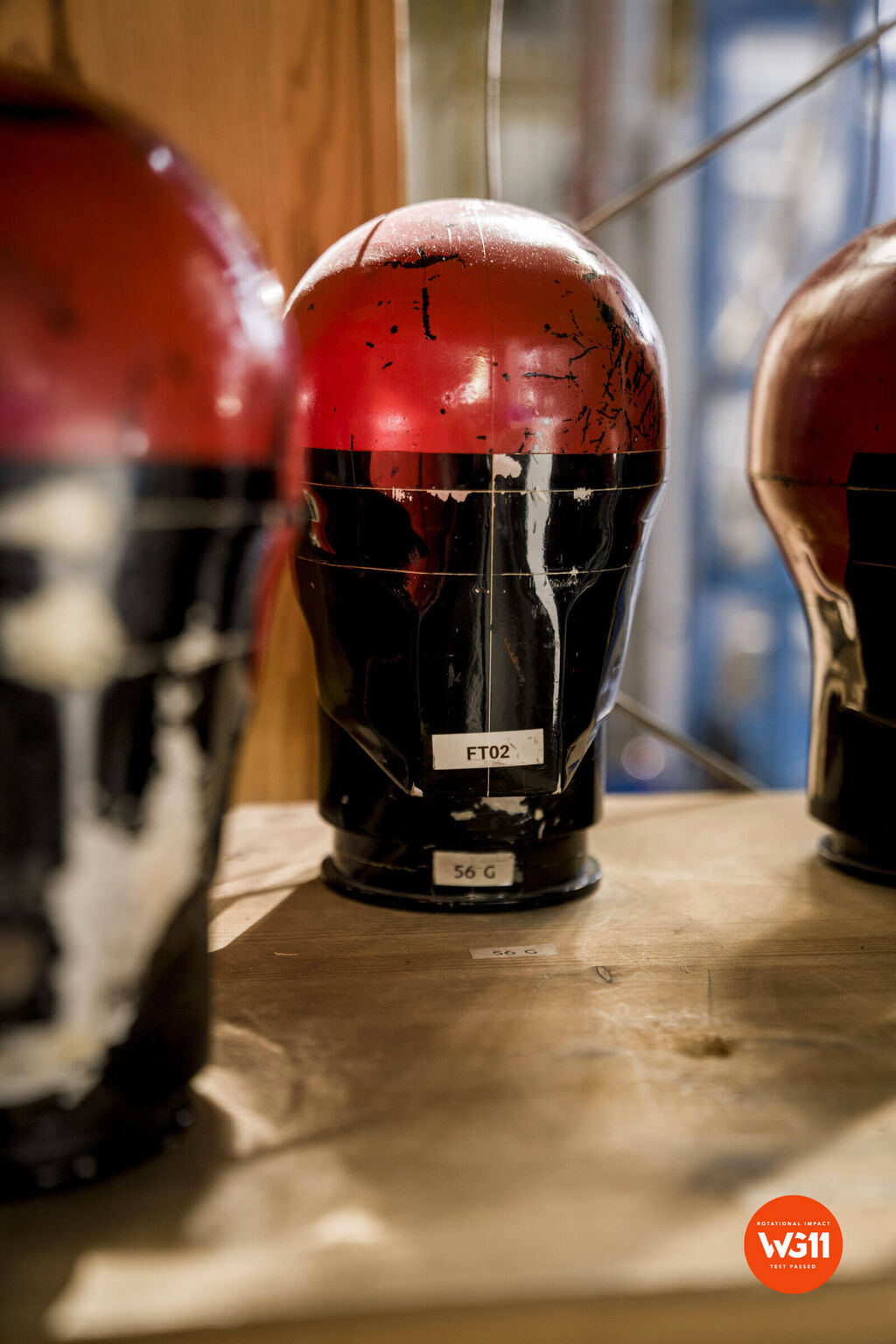
Most helmet tests apply rotational impact protection techniques to head shapes with a higher coefficient of friction than the human skull. Therefore, they may not accurately reflect what happens in some accidents. The “pass-fail” criterion is based on the BrIC value, an algorithm that defines the degree of brain injury. This value must be less than 0.68.
The final test protocol is:
- TESTS WITH AN INCORRECT IMPACT
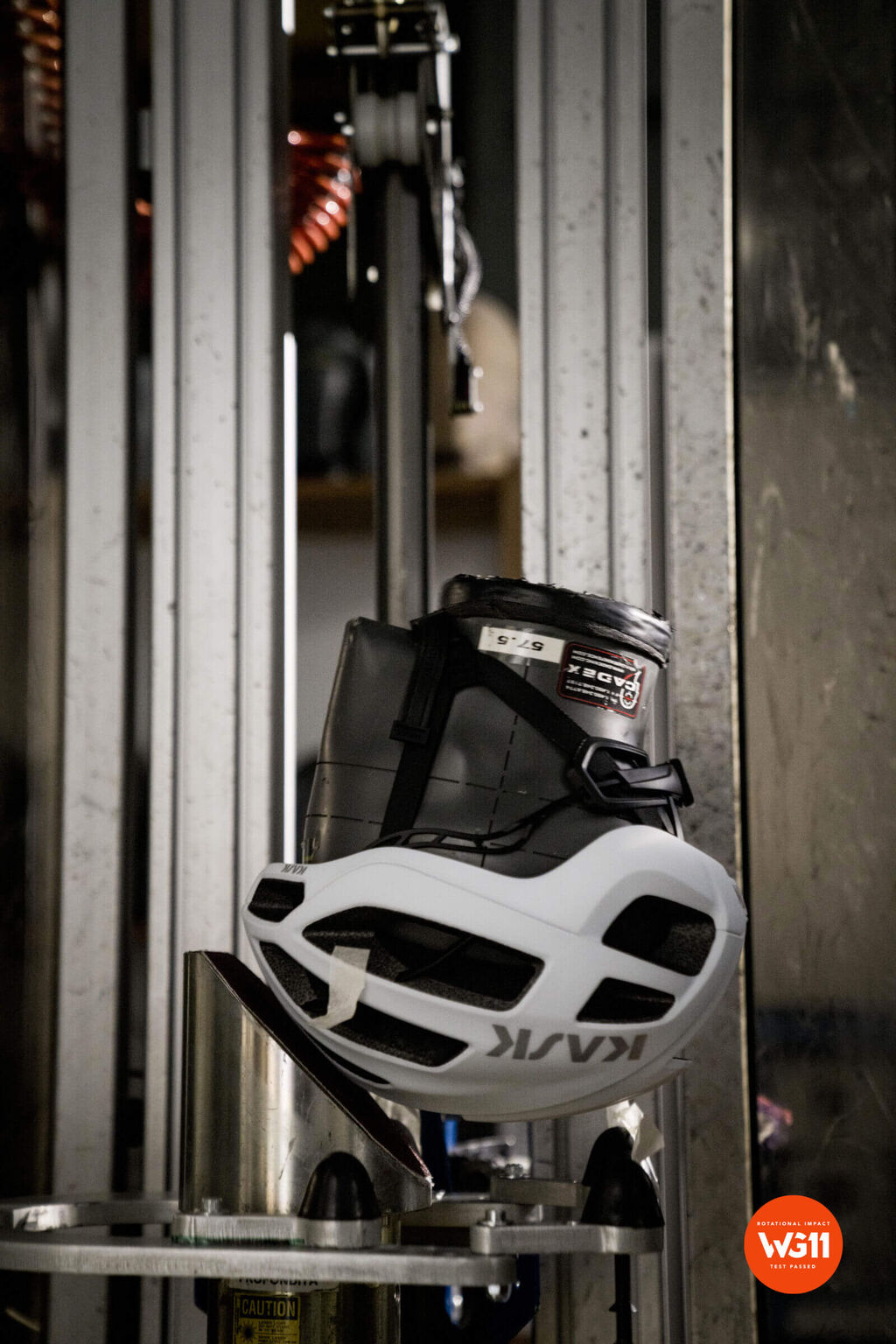
- Inclined tests at 45°, impact velocity 6 m/s, BrIC < 0.68
- + Class 80 aluminum oxide sandpaper with closed coating
- + Head shape Nominal coefficient of friction 0.3
- + Wireless system: triaxial accelerometer + n. 3 ARS
- Head shape: EN960 series
- Measurements: Peak angular acceleration, peak linear acceleration, HIC, BRIC (< 0.68)
All KASK helmets have passed this test successfully, with their values being significantly below 0.68 BrIC 0.390.
*ROTATIONAL IMPACT WG11 TEST PASSED is a registered trademark of KASK. ROTATIONAL IMPACT TEST PASSED is an internal KASK oblique impact test that measures the protective effect of helmets against rotational impacts. This test has not been accepted by CEN or CEN TC158/Working Group 11.